Horny Conventioneers

The Setup
You can probably name a few stock joke characters off the top of your head: the man who walks into a bar, travelers stranded on a desert island, those sorts of guys. You can probably name one or two that stick in your brain despite being long obsolete, like the door-to-door salesman. One you might not remember, despite being well known in midcentury America, is the horny conventioneer. Conventions did not go anywhere, and neither (I’m to understand) did horniness, but this specific character lurked the country’s ballrooms and bars before succumbing to end-of-century enlightenment.
We’re talking not just about political conventions but social groups and professional organizations–in some ways a wide swath of people and in other ways terribly narrow. For all the organizations these conventioneers belonged to, the stock conventioneer was basically one guy: a white, middle-aged professional drinking and fucking on a company-expensed vacation.
And yes, the horniness is important. “Horny” and “conventioneer” was once a peanut-butter-and-chocolate combination. To mention a conventioneer was to evoke a prowling horndog. So bricked up were these out-of-state visitors that it was considered comically obvious.
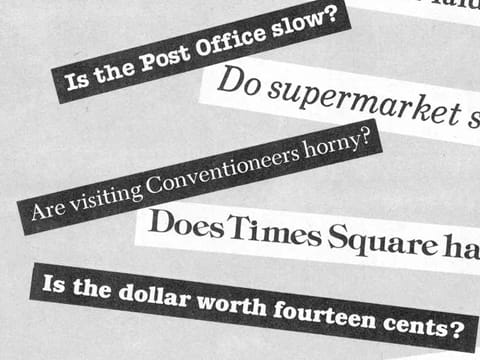
Let’s go back to past decades and talk about the moment these drunken perverts had. Throughout the 20th century, conventions were lucrative for host cities. The 60s and 70s, though, was a real boom time. Cities broke ground on convention centers, they courted organizations, and some of the largest convention economies were just getting started. Las Vegas, for example, only started to blow up as a convention destination after completing the Las Vegas Convention Center in 1959.
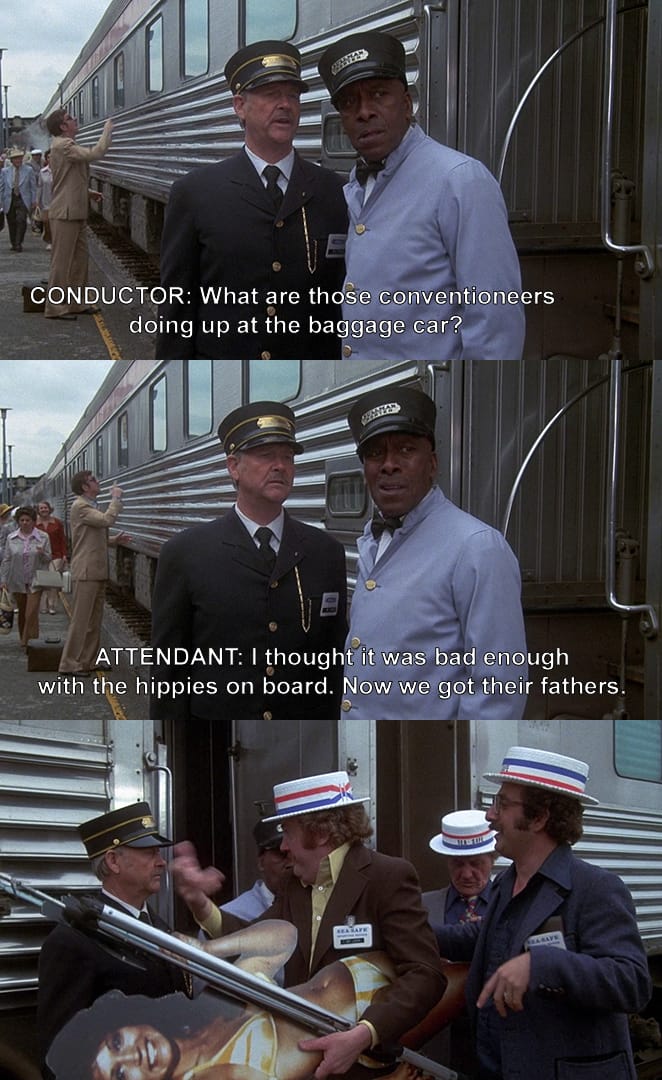
At the heart of a convention are, naturally, the people, and these people had a well defined reputation. Your stereotypical conventioneer was loud, rude, garishly dressed, inebriated, and looking for sex (or at least emanating a groper’s aura). The 1976 comedy Silver Streak opens in a train station with three conventioneers causing trouble. The train attendant is blatantly annoyed to see them as they parade past, cackling and carrying a cardboard standee of a bikini model. Their age is notable–they are fathers, a generation removed from today’s youth.
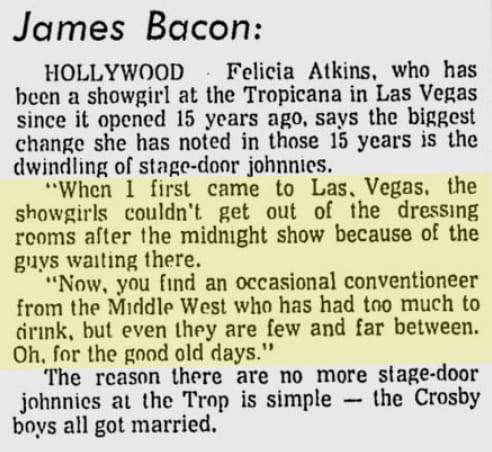
The conventioneer was also an outsider and an annoying one at that. Wherever a convention was held, conventioneers by nature came from out of town–from a different place and culture. If you lived in a smaller town, you might consider conventioneers interloping city slickers. If you lived in a big city, then conventioneers might be unsophisticated yokels. I enjoy this 1972 gossip columnist reporting on “stage-door johnnies” in Las Vegas. The report itself is a joke about Bing Crosby’s adult sons, second-generation socialites finally settling down. But it also paints a picture of a Vegas showgirl beset by schwasted midwesterners.
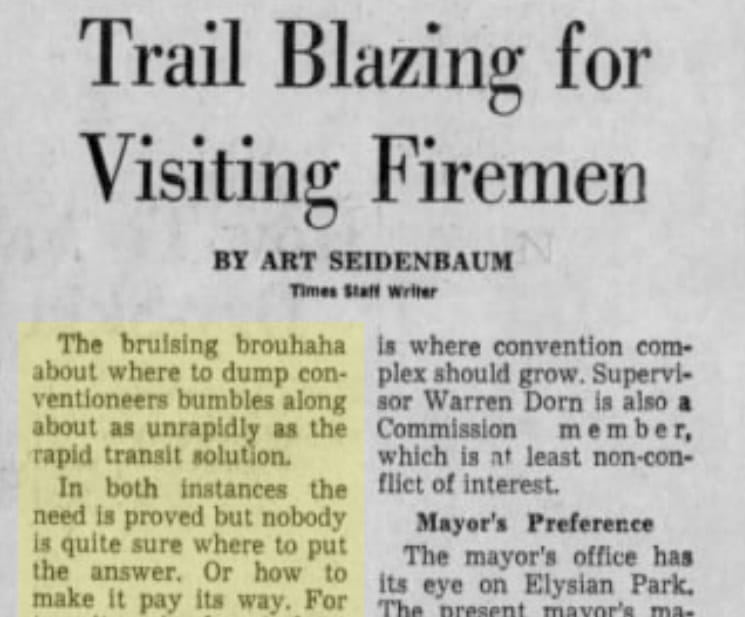
It did not help that cities struggled to accommodate the crush of visitors. Cities today can strain under a big event, but infrastructure in the 60s had not caught up to a runaway business. Conventioneers were both personally unpleasant and physically taxing to the places they went. Local papers across the country reported on this surge in visitors, like this 1963 Los Angeles Times article that calls them “visiting firemen”–not a literal fireman convention but a condescending metaphor used in coastal cities to refer to heartland oafs.
It probably goes without saying that the reason cities put up with conventioneers, in all their libidinous terror, was money. Conventioneers spent a lot of cash on hotels, on restaurants, on drinks, and on what we’ll tactfully call nightlife. And because money is involved, we can add another detail to the portrait of conventioneers: they were overwhelmingly white and their money overwhelmingly went to white-owned capital. The May 1972 issue of Black Enterprise discusses conventions from a black perspective, stating that black travelers accounted for only 2.5% of the convention economy, that airlines and hotels were rarely black-owned, and that black workers were relegated to low-paying service positions even when the convention business afforded them jobs.
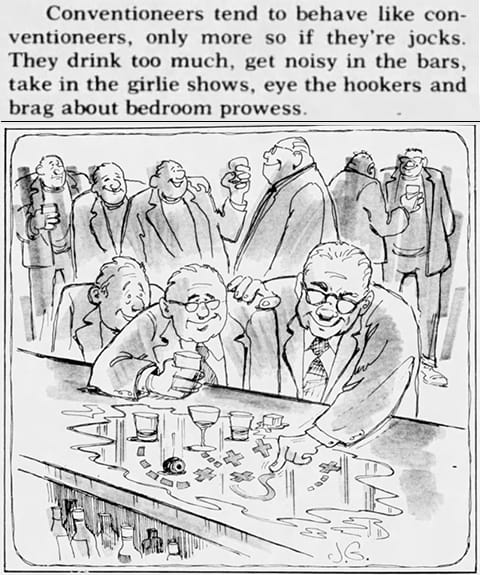
Conventions, in other words, were largely established by and for the ruling class. Even if a black businessman wanted to break into an industry, one can imagine that a clique of sex-starved good-old-boys was an unwelcome environment. A 1974 San Francisco Chronicle report on a convention of college football coaches describes them in all the stereotypical ways except race yet still includes a cartoon of an all-white crowd of barflies, their race unstated but plain to see.
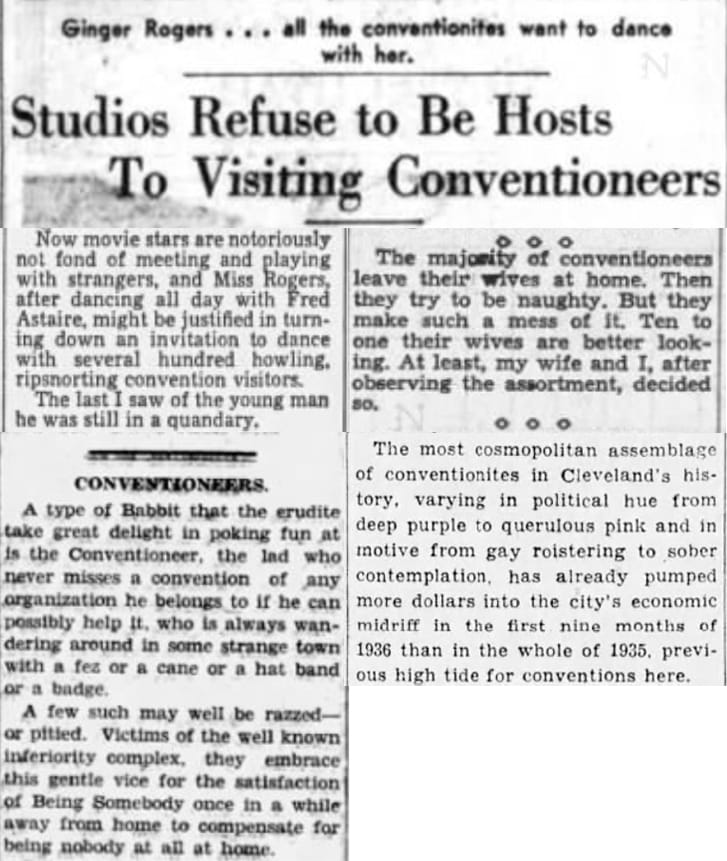
I mentioned the age of conventioneers earlier (and the old faces in the cartoon above are also a hint) because the horny conventioneer of the 60s was something of a revival. The stereotype of the convention boor went back to the 30s at least, and that decade was considered the heyday for rowdy convention-goers. All the details were the same but the jokes were less graphic. The era’s more demure sensibilities meant that, even if the behavior was just as obscene, the jokes were less so.
The most severe language I could find is still quite tame. One satirist makes fun of the conventioneer for wanting to “be somebody.” Another report of Hollywood starlets being harassed by lecherous visitors calls them only “ripsnorting.” Yet another calls cheating on your wife merely “naughty” and suggests the women have committed a greater sin by not being sufficiently attractive. This was good, normal fun–or if you prefer the words of one reporter, just a little "gay roistering."
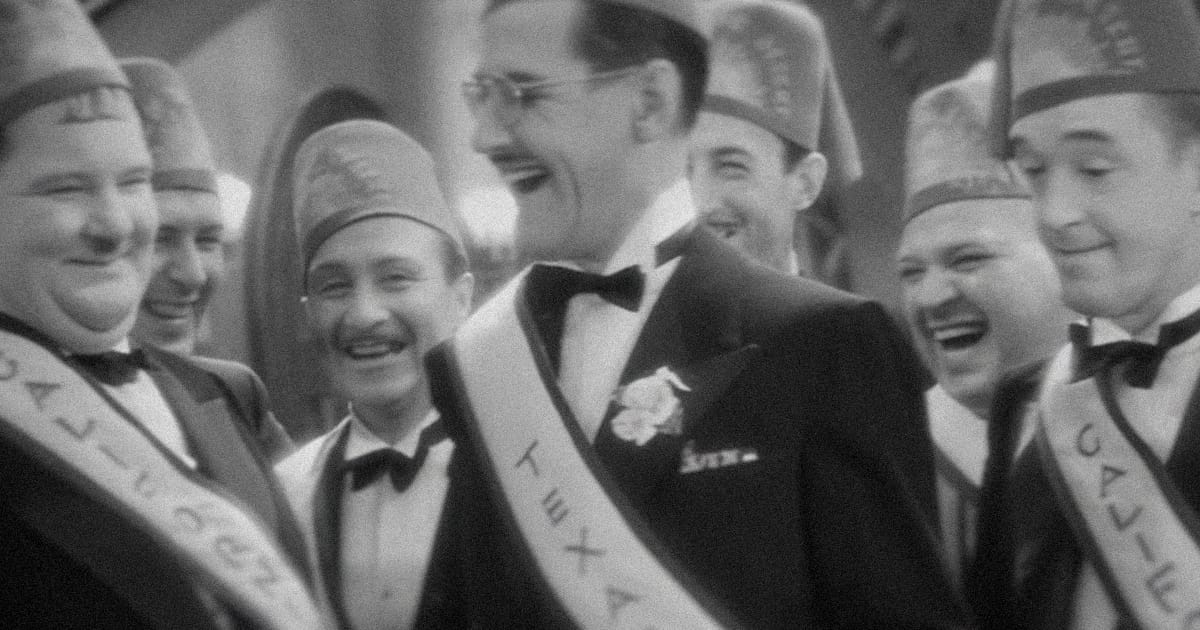
In 1933 Laurel and Hardy gave us an entire movie about conventioneers. Sons of the Desert tells the story of two hapless boobs (Laurel and Hardy's favorite kind of boob to play) who sneak away from their wives to attend a lodge convention in Chicago. The movie was a box office success and, honestly, pretty funny! It is also a mild, inoffensive film that portrays men as overgrown boys and their wives as overbearing nags. In one scene, a conventioneer giggles and tickles a dancer, and that's about as risqué as the picture gets.
Make no mistake: despite the euphemisms and old-fashioned language, men went to these conventions to drink and party. “Girlie show” establishments in the 30s advertised directly to conventioneers, promoting late shows and lots of booze. Nobody was naive about what these guys were doing. It was a story, in fact, that conventions started to clean themselves up. Newspapers in the 1950s reported that conventions were becoming more sober, professional affairs–although we still see allusive language that these men were “frisky” and “playboys” rather than “middle-aged accountants paying for sex.”
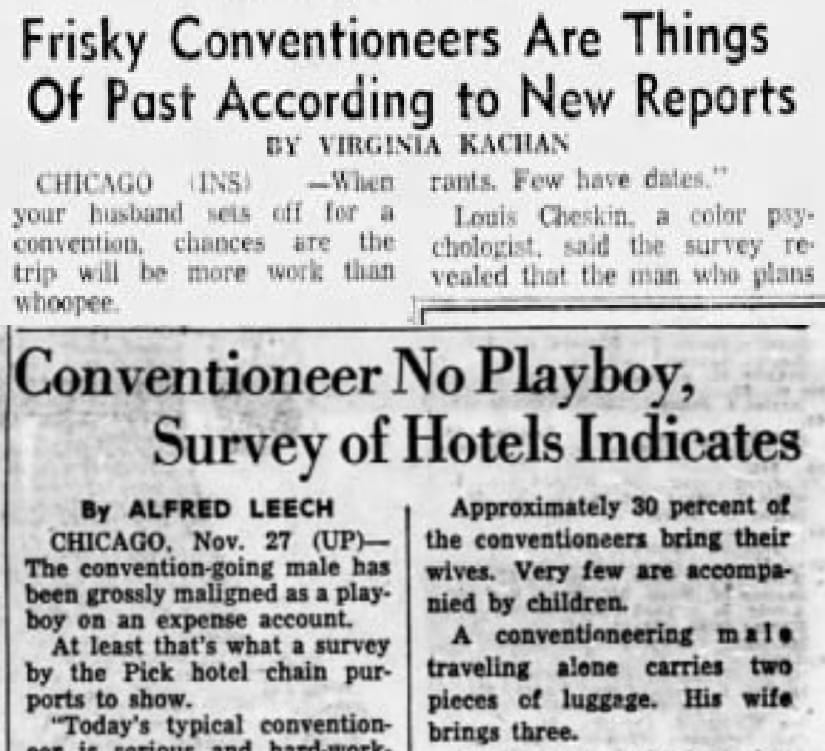
The “horny conventioneer” was thus not new but resurgent in the 60s, and times had changed. Jokes were told with a modern candor, the culture at large less timid about using sexual language and calling a man what he was. He was no longer a “naughty” husband having a dalliance, he was just a horny guy cheating on his wife in a city that resented his presence.
The Punchline
What is funny about the conventioneer? I don’t mean that sarcastically. What, really, is the joke? I think it depends on the era in which you answer and, more so, who you are.
If you’re a man of a certain age and generation, a man who thinks it’s fun to get falling-down drunk with your pals, that every red-blooded male needs to blow off steam from time to time, that boys will be boys and what they do on a vacation (I mean, convention) is nobody’s business–probably you think the horny conventioneer is a hoot. It’s funny to see a man cutting so loose that he falls apart. After all, besides a hangover, what consequences will he face?
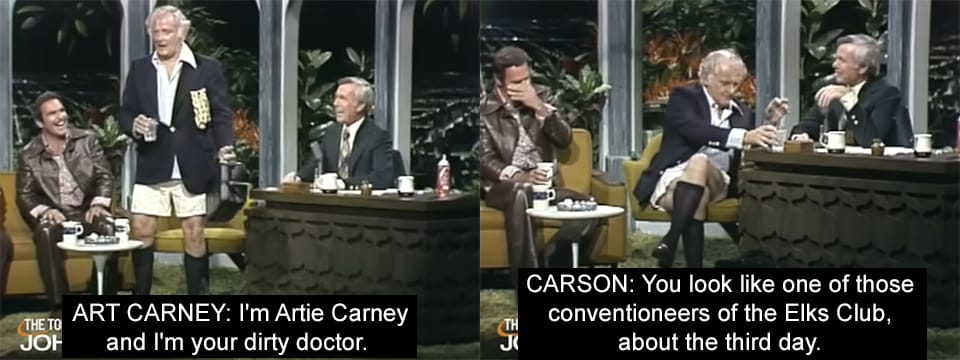
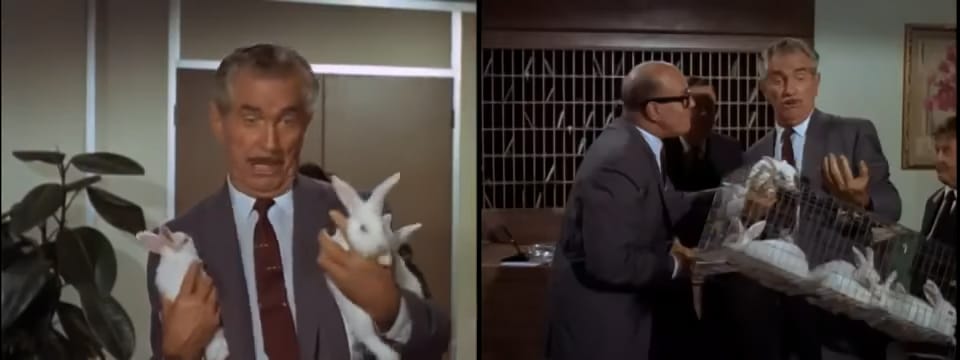
Foster Brooks played a small role in an episode of The Monkees TV show in 1967. He appears as a visibly drunk conventioneer (literally credited as “conventioneer”) traveling with a couple of rabbits. He’s waiting for his room to be made ready at a hotel where the Monkees work. Brooks is continually delayed, so he parks himself at the hotel bar and every time he reappears, his rabbits have multiplied. Even the family-friendly Monkees couldn’t resist a gag about how horny these dudes were and how publicly plastered they would get. (As a comedian, this was Brooks’ signature: he cut several records and appeared on numerous TV shows in the persona of an extremely drunk guy. Art Carney even references him in the Carson appearance above.) Brooks’ conventioneer neither drinks nor fucks on screen, so you might consider this the joke condensed to its most elemental, just signifiers of sex and drinking.
If you are not a man of a certain age, if you are someone who might not want a conventioneer’s attention, if you’re someone disinclined to laugh at public alcoholism, if you’re someone who does not think it’s funny when your husband cheats on you–what is the joke? What is funny about, let’s be honest, awful men behaving awfully?
This is not me scolding from the ivory tower of the 21st century. The public back then was losing its taste for this kind of media. A 1978 CBS comedy about sexy airline attendants called Flying High featured an episode where the stars have to “[fend] off a group of horny conventioneers lodged in their hotel" (The Journal Herald, 9/28/1978).
The episode seems to be lost media, and the show mostly forgotten, one of many T&A-centric productions dubbed "jiggle television." Newspaper reviews don’t tell us much besides that the plot involves the “Mystic Order of Imperial Otters” (and also that it sucks). We can draw from episodes that do survive, though: Flying High is shockingly retrograde and features plenty of men ogling the protagonists. The show was criticized as “mindless” and “old-fashioned” and audiences seemed to agree: it was canceled in its first season.
As we approach the end of the millennium, the horny conventioneer has all but evaporated. A 1986 episode of Cheers turned the trope on its head, making a punchline out of the idea that someone would want to interact with these gropey inebriates. (The person in question is Carla, redoubtably horny herself.) When the “Fraternal Order of the Caribou” show up at the bar, it is three frumpy men in what Norm calls “bad suits.” Frasier delivers a monologue calling them “sad.”
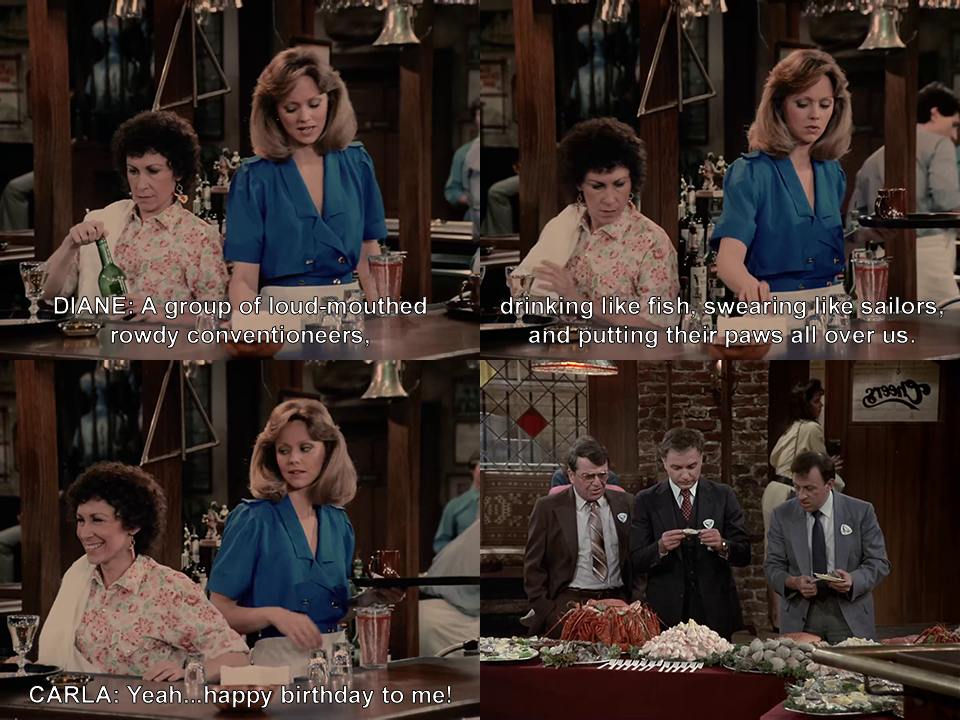
By this point the horny conventioneer was a figure out of time even though this was always who he was: a plain-ass guy trying to get laid. Obviously, that guy hasn’t gone anywhere. The plain-ass guy trying to get laid is one of the world’s most numerous types of guy. He had just lost a little grip on the culture. It was no longer funny to see a drunk in a suit groping a stewardess. He no longer had sympathetic writers calling him a playboy because he paid for sex on a work trip. He was no longer the hero of a story written by and for people like him.
It is tempting to look at the life and death of the horny conventioneer through the lens of what would be termed “political correctness.” In some ways I think that’s true: he was an early casualty of a culture that no longer tolerated him. The Woke Mafia of the Reagan years killed his ass. But this guy always sucked. He was loathed throughout the century, not victimized by a sudden shift in moral headwinds.
He is more, to me, a symbol of comedy as power. What you can laugh at tells others what power you possess. The conventioneer is often the butt of the joke, of course–how juvenile he becomes while away from home, how drunk and sex-crazed. This behavior is not powerful, it’s ridiculous.
What is powerful is getting away with it. It is powerful to be a thoroughly unlikeable dipshit who can treat host cities as debased playgrounds and have the newspaper report that you were only having a bit of fun. Once you’re not getting away with it, once you’re no longer seen as a boy-being-a-boy, you’re just a grown-ass man treating the world with childish cruelty. And we have a name for that kind of guy, a name it took the better part of a century to utter: an asshole.
Background reading
Douglas. Carlyle C. "Conventions." Black Enterprise. May 1972.